



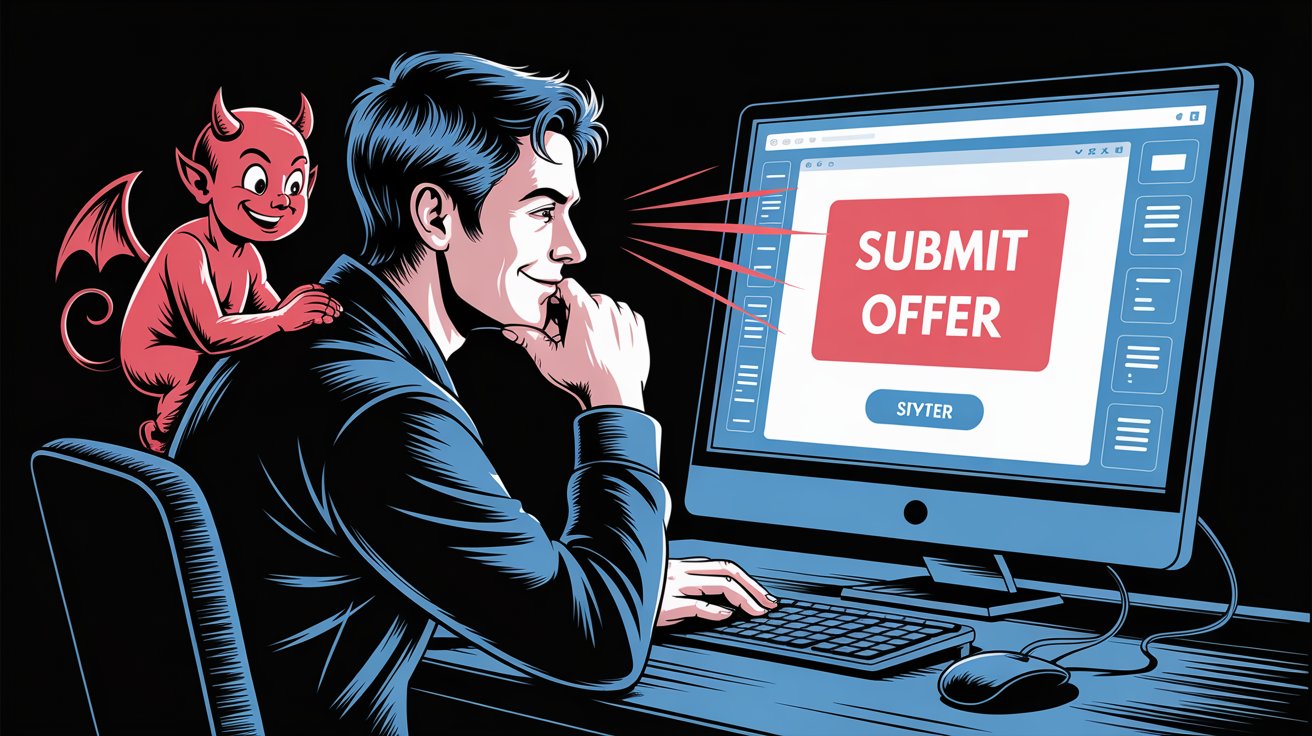
Fraudsters attack not only bank accounts and personal data — ad budgets, affiliate networks, and marketing funnels are under fire. Fraud has entered every digital channel.
While corporate security teams patch holes in infrastructure, attackers have long shifted to a weaker link — digital identity and human psychology. According to Juniper Research, by 2026 global losses from online fraud will exceed $362 billion. And it is no longer about how well servers are protected: attacks increasingly look like perfectly legitimate actions by the users themselves.
Below are five dominant schemes that require a rethink of the corporate protection strategy right now.
1. APP fraud: when the victim presses «Send» themselves
Authorized Push Payment (APP) fraud — one of the most insidious kinds of fraud precisely because technically everything happens correctly. The victim authorizes the transfer themselves: enters a PIN, passes biometrics, confirms the operation in the app. The bank sees a legitimate transaction from a trusted device and does not block it.
The scheme works through pressure and deception: a call from the «bank security service», a message about suspicious activity, urgency — and the person transfers the money themselves while the fraudster keeps them on the line.
Why is this so hard to stop? Challenging such a payment via chargeback is almost impossible: authorization was voluntary. In the UK, where APP fraud is especially common, losses exceeded £460 million in the first half of 2024 alone, and the trend keeps growing.
What actually works in 2026: a shift from transaction controls to behavioral biometrics. Next-generation systems analyze micro-patterns: atypical swipe speed, unusual time of day, an active incoming call during the transfer, trembling hands when entering the amount. If behavior diverges from the user's norm — the transaction is paused for extra verification.
2. Synthetic identities: a customer who does not exist
Imagine the perfect borrower: a clean credit history, a stable address, a real social-security number. The bank checks the data — it all matches. One problem: that person does not exist.
Synthetic ID fraud — it is the creation of «Frankenstein identities». Fraudsters take a real identifier (passport number, СНИЛС, SSN) — often belonging to a child, a pensioner, or a deceased person — and combine it with a fictional name, address, and biography. The result is a synthetic character who starts living a «digital life».
The bust-out scheme works in several stages:
- For the first months the account behaves impeccably: small purchases, timely payments, a rising credit score.
- After 6–18 months the «customer» requests the maximum credit or takes out a large installment (BNPL).
- Once the money is received — they vanish. The account is abandoned, the debt is written off as bad.
The threat to fintech and retail is especially high: traditional scoring models partly confirm such applications because some of the data is real and present in credit-bureau databases. According to Forbes Advisor estimates, synthetic ID fraud costs the US financial industry $20+ billion a year.
Verification through several independent sources and analysis of the «digital footprint» — online behavior, devices, geolocation — together, not in isolation, helps counter this.
3. Account takeover (ATO): your account is no longer yours
Account Takeover — not a new threat, but in 2026 it became a mass phenomenon at industrial scale. Hackers no longer break into accounts by hand: they buy ready-made tools and leak databases on dark marketplaces.
Two main tools:
- Credential Stuffing — mass stuffing of login/password pairs from leaks of other services. People reuse the same passwords: if your password leaked from a breached forum, a script will automatically check it on 500 other sites within a few hours.
- Phishing-as-a-Service — rental of ready-made phishing kits. For $50–200 a month a fraudster gets an exact copy of a bank or marketplace interface, a victim-management panel, and automated mailing. No technical knowledge is required.
Consequences for business go beyond direct financial losses: compromised accounts are used to cash out bonus points, steal linked cards, run fraudulent returns, and launder money. Reputational damage and customer churn often cost more than the theft itself.
4. AI in fraudsters' hands: the democratization of cybercrime
Generative AI made professional fraud available to amateurs — and that is arguably the main trend of 2026.
- Phishing without mistakes. Fraudulent emails used to give themselves away with typos and clumsy wording. Today LLM models generate flawless texts in any language, with the right tone, personalization for a specific recipient, and the corporate style of the target company.
- Deepfakes in real time. Many verification services use liveness checks: «turn your head», «blink», «say a word». In 2025–2026 neural networks learned to bypass these checks by overlaying a synthetic video image on the real camera stream. The KYC procedure succeeds — but there is nobody behind the screen.
- Attack automation. Bots based on AI agents test protection systems, pick bypass methods, and scale attacks without a human in the loop.
What this means for business
Protecting corporate infrastructure in 2026 is not point measures, but a multilayer strategy where each layer complements the other:
- Behavioral analytics instead of static rules — systems that know each user's «normal» pattern.
- ML detection models at onboarding — anomalies are easier to catch at registration than after the first transaction.
- Cross-channel monitoring — fraud often starts in one channel and is carried out in another.
- Updating KYC procedures with deepfake threats in mind: live interaction and documentary verification through independent sources.
Fraudsters adapt quickly. The only way to stay a step ahead is to build protection systems that learn with the threat, rather than reacting to it after the fact.
5. AdTech fraud: invisible losses of ad budgets
While business protects payment data and customer accounts, ad budgets leak through another hole — and often unnoticed. According to Juniper Research, in 2026 industry losses from ad fraud will exceed $172 billion. Money is charged, reports look good, but there are no real customers behind that traffic.
AdTech fraud — it is an ecosystem of schemes aimed at imitating legitimate ad activity: clicks, impressions, installs, conversions. We will break down the key ones.
Click fraud and bootclicking (Click Fraud)
The most common scheme. Bots or farms of real devices click ads, imitating audience interest. The advertiser pays for every click — and pays for emptiness.
Modern botnets can reproduce human behavior: random pauses, page scrolling, mouse movement. A simple check by IP or User-Agent no longer works. They can be found only through analysis of behavioral patterns at session level — time on site, view depth, click heatmaps.
SDK spoofing and fake installs (Mobile Ad Fraud)
A critical threat to mobile marketing. Fraudsters intercept signals of legitimate installs from real apps and use them to «claim» conversions that happened organically or through another channel.
The advertiser sees excellent CPI campaign metrics, pays the commission — but the traffic was bought from another source or came on its own. E-commerce and gaming apps with high payouts per install are especially vulnerable.
Domain spoofing (Domain Spoofing)
The fraudster sells ad impressions, passing cheap traffic from low-grade sites off as inventory of premium publishers. Bid metadata lists, for example, forbes.com — while the ad actually shows on an anonymous site with inflated audience.
This hits two parameters at once: the brand gets a placement in an unwanted context, and pays at top-media rates.
Fraud in affiliate networks (Affiliate Fraud)
Unscrupulous partners imitate target actions: applications, sign-ups, leads. Technically the form is filled, the pixel fired, CRM got a record — but there is no live person with intent to buy behind it. Especially relevant for financial offers and e-commerce paid per lead.
Why AdTech fraud is harder to catch than financial fraud
Financial fraud leaves a trace in transactions — it can be disputed or tracked. Ad fraud hides behind normal metrics: CTR within the norm, Geography in the right region, devices look like real smartphones. Without specialized traffic analysis at the level of individual sessions, fingerprint signals, and cross-campaign patterns — losses stay invisible.
That is why detecting ad fraud requires a separate toolkit, not an add-on on top of standard antifraud systems.
«The advertising ecosystem needs separate attention: AdTech fraud is systematically understated in corporate risk assessments, even though losses here are often the most predictable and removable — if the right detection tools are in place».
Intelligent protection of your online advertising with ClikBy
The platform ClikBy integrates into your advertising infrastructure as an independent protection layer — in parallel with pixels, not instead of them. Pixels keep collecting data for analytics and optimization. ClikBy at the same time analyzes more than 130 signals per click in real time and blocks fraudulent traffic before the budget is charged.
Additionally the system cleans bots out of your retargeting audiences — so Facebook and Google algorithms train only on real users. That raises the quality of lookalike audiences and the efficiency of automated strategies.
- Ensemble machine learning: we combine 5+ ML models to recognize synthetic identities.
- Zero-Trust Attribution: we verify every click, stopping bots from intercepting organic traffic.
- Adaptive thresholds: the system automatically lowers filter strictness during sale periods, minimizing False Positives.
Read more about the mechanics of ad fraud in our article: how to recognize click fraud on your ads.
Order antifraud for ads (Yandex.Direct, Google Ads, Meta Ads, and other platforms)